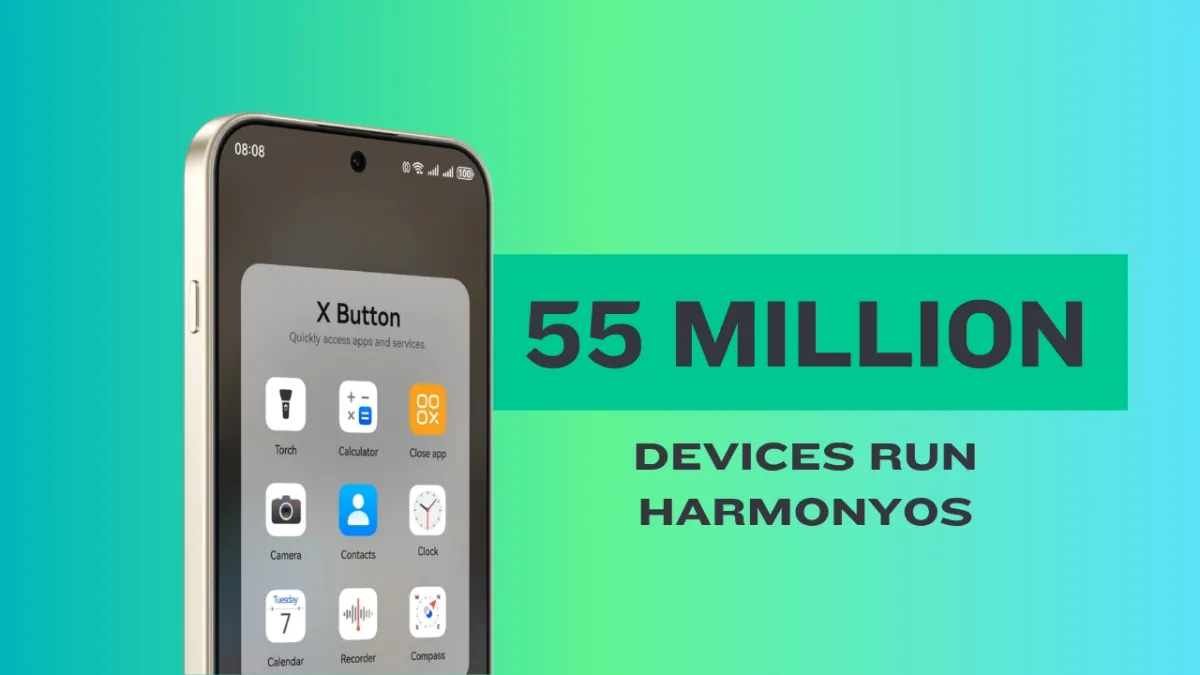
So, Huawei’s HarmonyOS is chugging along, now powering over 55 million devices. For you, the average tech consumer, what does this mean? It means choice. It means maybe, just maybe, you won’t be locked into the Apple or Google walled gardens forever. It means more competition, which, in theory, should translate to better products and, dare we hope, lower prices. But let’s not get ahead of ourselves. This number, while impressive, is only part of the story.
The real question isn’t how many devices HarmonyOS is on. It’s what kind of operating system it really is. Huawei, under the relentless pressure of Western sanctions that have choked off its access to US tech, is touting HarmonyOS as its homegrown, open-source savior. The numbers are indeed eye-popping: 55 million devices by March 2026, with a staggering 23 million added in less than six months. That’s enough to make the giants sweat.
What’s fueling this surge? Huawei trots out a laundry list of improvements. Fluid animations, performance boosts from its Ark engine, AI smarts for scheduling and camera wizardry, and an AI-driven security architecture dubbed StarShield. They’re even claiming better native app support. And, of course, there’s the hardware. Huawei’s devices aren’t exactly slouches, offering good bang for your buck.
“Market giants who wish to maintain their monopoly have every reason to be worried about the competition.”
This is where the narrative starts to get… blurry. HarmonyOS is built on OpenHarmony, which Huawei insists is an open-source foundation, akin to Google’s AOSP. Great, right? More contributions, more eyes on the code, faster development for everyone involved. This ecosystem play, they say, benefits related projects like EulerOS. It’s the open-source dream, a rising tide lifting all boats.
Except.
There’s a rather significant asterisk attached to this glowing picture. While OpenHarmony might be the base, HarmonyOS itself is layered with proprietary Huawei tech. We’re talking about that Ark compiler and those slick UI elements. It’s not quite as pure an open-source offering as the marketing suggests. Think of it like buying a car that advertises itself as “partially electric” while still guzzling gasoline. And then there’s the documentation. Mostly in Mandarin. So, for a vast chunk of the world population, accessing the inner workings of HarmonyOS is about as easy as learning to speak fluent Chinese overnight.
And Huawei’s approach to expanding its ecosystem? Some describe it as… aggressive. Rumors abound of Huawei aggressively pushing its OS onto open-source projects. While some might see this as a pragmatic, if slightly pushy, way to build adoption, others rightly view it as intrusive. It’s the digital equivalent of a traveling salesman knocking on your door at 7 AM.
Is this a True Open Source Challenger?
This is the million-dollar question, isn’t it? The success of HarmonyOS highlights a genuine appetite for alternatives to the established players. Consumers, particularly in markets where cost is a significant factor, are looking for viable options. If Huawei can deliver a stable, feature-rich experience that doesn’t feel like a watered-down imitation, it absolutely represents a significant challenge to the Apple/Google duopoly. The 55 million devices aren’t just numbers; they are people opting for something different. But whether that ‘different’ is truly open and collaborative, or just another powerful entity building its own kingdom with a veneer of openness, remains to be seen.
The comparison to Android is apt, but it’s also a trap. Android, for all its faults and Google’s heavy hand, has a more established, global open-source community. HarmonyOS is still climbing that mountain, burdened by its geopolitical context and questions about its genuine commitment to collaborative development. The hardware is strong, yes. But hardware alone doesn’t make an operating system truly open.
What Does This Mean for the Average User?
Look, for the everyday person, this is largely good news. More competition means more innovation. It means companies have to fight harder for your attention, which usually results in better products at better prices. If HarmonyOS devices become widely available and offer a compelling user experience, they could provide a much-needed alternative. Especially for those who feel priced out of the premium offerings from Apple and Samsung. The key, however, is sustained quality and genuine openness. If HarmonyOS turns out to be just another flavor of the same old proprietary stew, its impact will be limited.
Ultimately, the 55 million devices are a powerful signal. They demonstrate that there’s room for growth beyond the current mobile OS giants. But the true test of HarmonyOS will be its ability to foster a genuine, collaborative open-source community, not just build a user base for its own proprietary ecosystem.
🧬 Related Insights
- Read more: Next.js 15 vs Astro 4: Performance Showdown [Deep Dive]
- Read more: Docker Just Made Hardened Images Free and Open Source—Here’s Why That Matters
Frequently Asked Questions
What is HarmonyOS primarily based on? HarmonyOS is built on OpenHarmony, an open-source operating system base.
Will HarmonyOS be available outside of China? Huaiwei has not made specific announcements regarding global availability beyond China. Its adoption is currently heavily concentrated within the Chinese market.
Is HarmonyOS truly open source? While OpenHarmony is open source, HarmonyOS itself incorporates proprietary layers and software from Huawei, leading to debate about its level of openness.