Everyone expected Anthropic to keep quietly expanding its compute footprint, a steady drip of deals with the usual suspects like AWS and Google. But this? This is different. Partnering with SpaceX for access to its 220,000-GPU Colossus 1 supercomputer isn’t just a capacity bump; it’s a public declaration that Anthropic is playing a bigger game, and it’s tired of being bottlenecked.
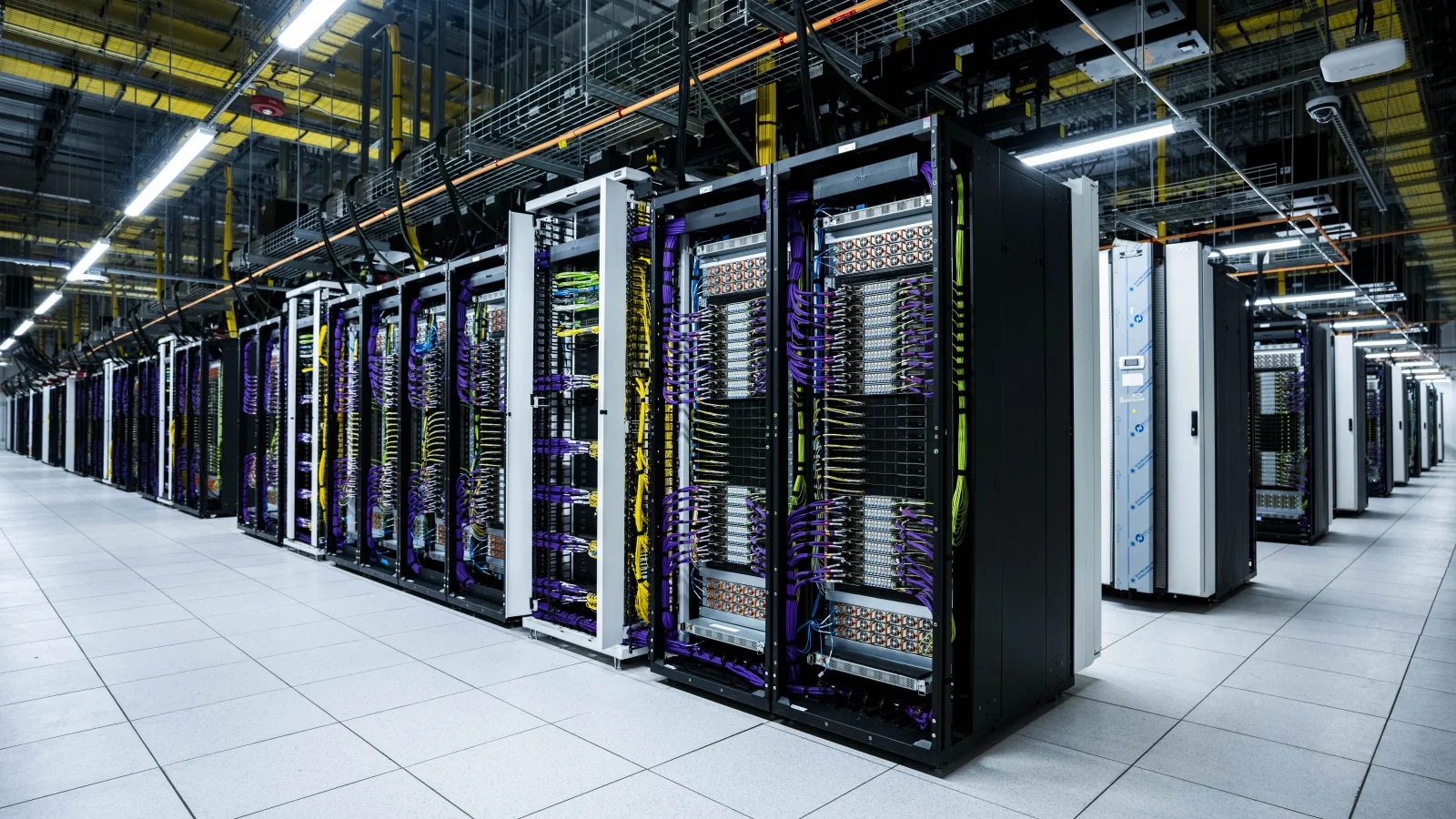
This isn’t some minor capacity extension. SpaceX calls Colossus 1 “one of the world’s largest and fastest-deployed AI supercomputers.” Think over 220,000 NVIDIA GPUs, including the bleeding edge like H100, H200, and soon GB200. That’s a serious chunk of silicon, all dedicated to AI training, fine-tuning, and inference. It’s enough to make other AI labs sweat.
Is This the End of ‘Token Shock’?
For the legions of Claude Pro and Claude Max users who’ve found themselves bumping against invisible walls with alarming frequency, this news should, in theory, be music to their ears. We’ve all seen the Reddit threads, the exasperated tweets: a single, complex prompt costing 10% of your usage limit. That’s not a workflow; that’s a tightrope walk.
Anthropic says this new compute hoard means immediate changes. They’re doubling rate limits for Claude Code on multiple tiers and ditching peak-hour limitations for Pro and Max subscribers. API rates for Claude Opus are also getting a massive boost – input tokens per minute are jumping from 30,000 to a whopping 500,000 for Tier 1 users. Output limits see a similar, albeit less dramatic, surge. It’s a clear signal that they’re trying to move users from “cautious prompt budgeting” to actually doing things.
“The shift changes workflows from cautious prompt budgeting to deeper reasoning, bigger tasks, and more complete engineering output.”
Developers like Elmer Morales at koderAI see this as freedom. Freedom from meticulously rationing prompts. Freedom to build richer applications and more advanced agents. The kind of freedom that lets you focus on building, not on calculating token costs.
A Compute Arms Race? Anthropic’s Buying Spree
This SpaceX deal isn’t happening in a vacuum. It’s the latest, and arguably most dramatic, move in Anthropic’s aggressive compute acquisition strategy. They’ve been on a veritable shopping spree, making massive commitments across the board. We’re talking up to $25 billion from Amazon for Trainium and Graviton cores, expanded Google Cloud deals including a million TPUs (eventually), and a staggering $30 billion commitment for Microsoft Azure compute capacity. They are, to put it mildly, investing heavily.
This isn’t just about keeping the lights on; it’s about scaling aggressively. While other companies might be content with gradual expansion, Anthropic appears to be bracing for a future where demand for its AI services is not just high, but astronomical. They’re not just securing capacity; they’re signaling long-term commitment.
The Real Impact on Developers
So, what does this mean for the folks actually building with Claude? Firstly, more freedom. Less time spent agonizing over prompt length, more time on actual problem-solving. This could lead to more complex, nuanced applications emerging from the Claude ecosystem. Think AI agents that can handle multi-step reasoning without choking, or code generation that’s less hesitant and more comprehensive.
But there’s a subtler, and perhaps more cynical, interpretation. Anthropic has been famously tight on capacity, leading to frustration. This massive influx of compute suggests they knew they had a problem. The question is, was it a capacity problem, or a model efficiency problem they were hoping to solve with sheer brute force? It’s easy to mask model inefficiencies with unlimited compute. Let’s hope they’re not just papering over cracks.
This isn’t just about Anthropic getting more GPUs. It’s about a fundamental shift in how AI models are being deployed and consumed. When you have access to something like Colossus 1, you start thinking differently about what your AI can do. The ambition levels rise. Developers will be able to push the boundaries further, knowing the infrastructure is there to support it. It’s a commitment to ensuring their platform has “enough juice to run at scale.”
What Happens to Open Source AI?
This massive compute consolidation by a few major players, even with the open-source community’s own impressive strides, is worth watching. While Anthropic is a closed model, the underlying infrastructure race and the sheer scale of these private AI supercomputers will inevitably shape the broader AI landscape. Will this drive more innovation in efficient open-source hardware utilization, or will the sheer cost of entry create an even wider chasm? It’s a question that hangs in the air, much like the smoke from a rocket launch.
🧬 Related Insights
- Read more: The ‘I Built’ Post Industrial Complex: Why Standardizing Developer Narratives Backfires
- Read more: AI is Here: A New Era Dawns
Frequently Asked Questions
What does SpaceX’s Colossus 1 do? Colossus 1 is a massive AI supercomputer owned by SpaceX, boasting over 220,000 NVIDIA GPUs. It’s designed for large-scale AI training, fine-tuning, and high-performance computing tasks.
Will this make Claude faster or more accurate? While increased compute capacity can improve model performance and reduce latency, Anthropic’s primary stated goal with this partnership is to alleviate usage limits and provide more capacity for existing Claude models.