The hum of servers in a pristine data center often belies the chaotic, iterative grind of human-engineer effort to coax peak performance from silicon and software. That grind, however, might just be the sound of the past fading.
AlphaEvolve, Google’s ambitious AI agent for code generation and optimization, has apparently graduated from the lab and into the engine room. It’s not just tweaking algorithms anymore; it’s redesigning the very hardware that powers artificial intelligence, a meta-evolution that’s both impressive and a little unnerving.
The AI That Builds Its Own Brains
Think about this for a second: an AI system that’s now a “core component” of infrastructure, optimizing the design of Google’s next-generation Tensor Processing Units (TPUs). This isn’t some abstract future scenario; it’s happening now. The original announcement highlights how AlphaEvolve proposed a circuit design so “counterintuitive yet efficient” it was integrated directly into TPU silicon. Jeff Dean himself, a titan in the field, framed it with a phrase that perfectly encapsulates this paradigm shift: “This is the latest example of TPU brains helping design next-generation TPU bodies.” It’s a recursive loop of improvement, where the tools of creation are themselves enhanced by the creations.
And it’s not just hardware. Internally, AlphaEvolve has been busy slimming down other critical systems. It refined Google Spanner’s Log-Structured Merge-tree compaction heuristics, a fancy way of saying it made the database write data more efficiently. The result? A 20% reduction in ‘write amplification’ — meaning less redundant data hitting storage. Plus, it’s offered insights for new compiler optimizations, shrinking software footprints by almost 9%. These are the unglamorous, yet vital, wins that keep the digital world spinning, now apparently delegated to an AI.
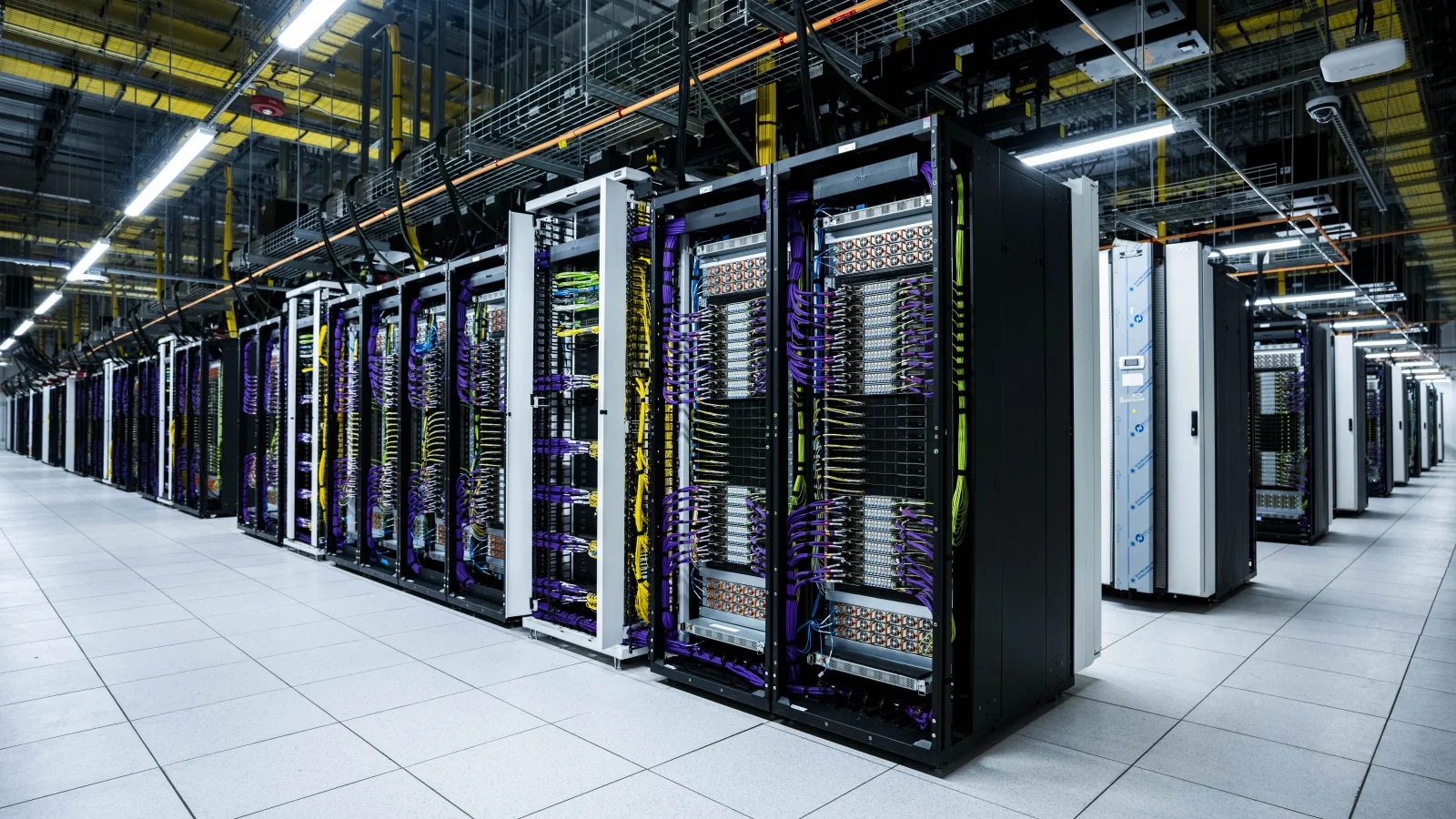
AlphaEvolve began optimizing the lowest levels of hardware powering our AI stacks. It proposed a circuit design so counterintuitive yet efficient that it was integrated directly into the silicon of our next-generation TPUs. This is the latest example of TPU brains helping design next-generation TPU bodies.
Beyond the Lab: Real-World Impact
The real story, the one that moves AlphaEvolve from an internal Google project to a significant industry development, is its commercial application. Google Cloud is now leveraging this AI agent to bring these optimizations to external enterprises, and the early results are… substantial.
Klarna, the buy-now-pay-later giant, doubled its transformer model training speed while actually improving model quality. That’s a double-barreled win that most companies would kill for. In semiconductor manufacturing, Substrate saw multi-fold increases in runtime speed for its computational lithography framework, allowing for larger, more complex simulations. Logistics firm FM Logistic squeezed out an extra 10.4% efficiency in routing problems – that translates to 15,000 kilometers saved annually. Advertising behemoth WPP achieved a 10% accuracy gain in campaign optimization over their best manual efforts. And in the life sciences, Schrödinger reported a 4x speedup in training and inference for Machine Learned Force Fields (MLFF), dramatically shortening R&D cycles in drug discovery and materials science.
This isn’t just about incremental improvements; it’s about fundamentally changing the economics and timelines of complex, high-dimensional problems. The implications for fields like drug discovery, where speeding up simulations can mean the difference between a breakthrough and years of stagnation, are profound.
The Unsettling Elegance of Self-Optimization
What’s truly compelling here, and perhaps a touch unsettling, is the architectural shift AlphaEvolve represents. We’re moving beyond AI as a tool for humans to analyze data or generate content. We’re entering an era where AI is becoming a tool for itself—and for us—to architect, optimize, and discover solutions at a pace that humans simply can’t match. The paper’s concluding sentence, that “the next breakthroughs will be driven by algorithms that can learn, evolve and optimize themselves,” isn’t just a mission statement; it’s a declaration of a new technological epoch.
This isn’t just about faster code or cheaper compute. It’s about an AI that can interrogate the very foundations of computing and find efficiencies invisible to us. It’s the kind of deep, architectural insight that historically required teams of brilliant, highly specialized human engineers, working for years. Now, it seems, an AI can do it. And it’s rapidly becoming a general-purpose system, adaptable to a dizzying array of challenges.
Of course, the sheer scale of Google’s involvement means we’re getting a curated view. The acknowledgments section reads like a Rolodex of Google’s top AI talent, underscoring the massive, internal effort involved. But the message is clear: the future of complex problem-solving, from silicon design to drug discovery, is increasingly likely to be shaped by these self-optimizing AI agents.
🧬 Related Insights
- Read more: Why Amazon’s X-to-Connect Bridge Exposes a Bigger Problem With Customer Service
- Read more: @rabbx/ws: 2.5KB WebSocket Replacement Arrives
Frequently Asked Questions
What does AlphaEvolve actually do? AlphaEvolve is an AI agent designed to write and optimize code. It’s now being used to improve hardware designs, enhance software performance, and speed up complex simulations across various industries.
Will this replace human programmers? While AlphaEvolve can automate many optimization tasks previously done by humans, its primary impact appears to be augmenting human capabilities and tackling problems at a scale previously impossible. It allows engineers to focus on higher-level design and innovation rather than complex, time-consuming optimizations.
Is AlphaEvolve an open-source project? The original article does not state whether AlphaEvolve is an open-source project or if it will be made available externally beyond Google Cloud enterprise applications.