The faint hum of a server fan in a rented data center is a familiar sound, a constant reminder that behind every slick app and online service, there’s a box somewhere running code.
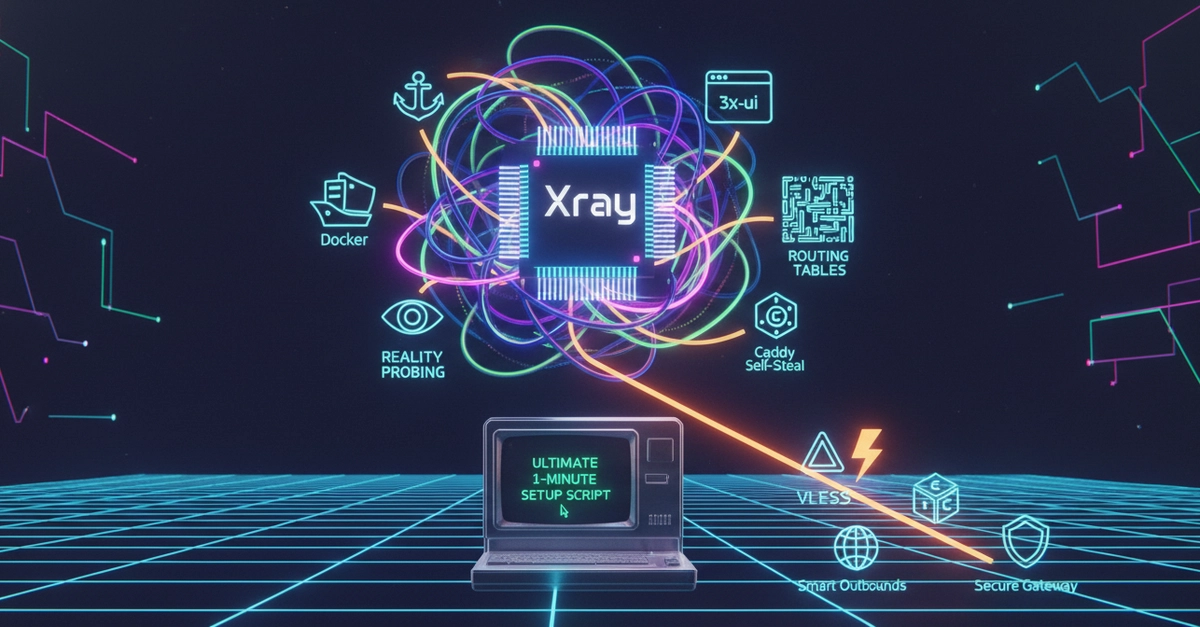
And for those of us who’ve been navigating the murky waters of Silicon Valley for the better part of two decades, the promise of instant, secure, and complex network setups usually means one thing: someone’s found a way to monetize convenience, and you’re likely the one paying for it, one way or another. The latest entrant into this arena of simplified circumvention tech is a bash script dubbed ‘3xui-fast-install,’ which pitches a fully deployed Xray node with a 3x-ui management panel in under 60 seconds.
Let’s be clear: setting up Xray, especially with advanced features like VLESS, Reality, and strong outbound routing, has always been a bit of a bear. It’s a process that typically involves wrestling with Docker, wrestling with TLS certificates, and generally wrestling with your own sanity as you try to avoid detection. This script, however, claims to bypass all that tedious fiddling.
What’s Actually Under the Hood?
This isn’t just another one-click installer for a barebones panel. The project’s creator lists a whole ecosystem packed into this rapid deployment:
- 3x-ui Panel: Your new web dashboard, conveniently tucked away on non-standard ports. Fancy.
- VLESS + Reality: The current darling of secure transport, designed to look like regular TLS traffic on port 443. Blending in, they call it.
- Hysteria 2: For those rough internet days, this UDP-based protocol promises speed and resilience, landing on a rather specific port (63000).
- Caddy (Self-Steal): This acts as the front door for port 443, magically fetching Let’s Encrypt certificates. Self-stealing, indeed.
- Cloudflare WARP: Apparently, this is for rerouting domestic traffic, making sure your VPS IP isn’t directly exposed to your home country’s ISPs. A clever bandage, perhaps.
- Opera Proxy & Tor: Additional SOCKS5 outbounds for hitting geo-blocked content and diving into the
.onionsphere. - BBR & Security: TCP BBR for faster speeds, UFW for basic firewalling, and Fail2ban for keeping brute-forcers at bay. Standard hardening stuff.
The real meat here seems to be the outbound routing. Instead of just slinging all traffic through the Xray node, the script sets up rules: block ads and malware outright, send Russian or domestic traffic through WARP, and route streaming services via Opera Proxy, with .onion traffic sniffing around Tor.
The outbound routing rules listed above (such as Opera Proxy, Tor, or specific domain rules) are configured as examples to showcase the full capabilities of the script. You can easily modify, remove, or add your own custom routing parameters in the 3x-ui panel settings anytime after the installation is complete.
This level of granular control is, in theory, excellent. It means you’re not just setting up a pipe; you’re orchestrating traffic with a degree of sophistication. But let’s circle back to who’s actually benefiting here beyond the end-user who just wants a faster, more private connection.
Who’s Really Making Money Here?
The PR spin is always about user empowerment, about breaking down barriers to access. And sure, on the surface, a one-minute setup for advanced proxy tech sounds like a win for the individual user, especially those in restrictive environments or those who just detest manual configuration. But the real money, as always, is in the infrastructure. The creator of this script is essentially selling a highly optimized deployment recipe. They’re providing a shortcut, and in the world of servers and bandwidth, shortcuts often come with a hidden cost or, at best, a boost to the creator’s reputation and potential future projects. Hosting providers are the ultimate beneficiaries – the more people setting up these sophisticated nodes, the more VPS instances are rented.
And let’s not forget the underlying technologies: Xray, Docker, Caddy, Cloudflare WARP, Tor. These are open-source projects, giving away their power freely. The value here is in the assembly and automation. It’s the ‘batteries-included’ approach that commands attention, and potentially, future patronage.
Why Does This Matter for Developers?
For developers, especially those working on distributed systems or network infrastructure, this kind of automation is both a blessing and a curse. It abstracts away complexity, allowing for rapid prototyping and deployment. If you’re tasked with setting up multiple secure endpoints quickly, a script like this is a godsend. It frees up your time to focus on higher-level problems rather than the nitty-gritty of installation and configuration.
However, it also raises questions about how much of the underlying technology developers actually understand when they rely on these all-in-one solutions. The security hardening, the routing logic – it’s all there, but is it understood? When something breaks, or when a new vulnerability emerges, will the user know how to patch it beyond re-running the script? The convenience comes at the price of deep familiarity. The ease of use for the end consumer is mirrored by a potential opacity for the user who needs to troubleshoot or customize beyond the provided examples.
The Road Ahead
This script is a proof to the ongoing demand for streamlined, secure internet access. Whether it’s for circumventing censorship, enhancing privacy, or just getting around pesky geo-blocks, the need is undeniable. The question is whether this specific implementation, while undeniably fast, offers the long-term stability and transparency that seasoned users demand.
It’s open-source, which is a good sign. You can peek under the hood, as the creator encourages. But the speed and the clever integration of multiple tunneling protocols—VLESS, Hysteria2, Caddy, WARP, Tor—packaged into a 60-second install is certainly going to turn heads. Just remember to ask yourself, as you click that install button, where the real value and the real money are truly flowing.
🧬 Related Insights
- Read more: DevOps Jobs Surge: Six-Figure Salaries Abound
- Read more: What is GPL?
Frequently Asked Questions
What does 3x-ui-fast-install do? It’s a bash script that automates the setup of a secure Xray server node with a 3x-ui web management panel, VLESS, Hysteria2, Caddy, and advanced outbound routing rules in under 60 seconds.
Do I need a domain name to use this script? Yes, the script requires a registered domain name with an A-record pointing to your VPS IP address for Caddy to issue Let’s Encrypt certificates.
Can I customize the routing rules after installation? Absolutely. The script configures example routing rules, but you can easily modify, remove, or add your own custom routing parameters directly within the 3x-ui panel settings after the installation is complete.